Five Natural Dye Plants to Sow in Spring for Vibrant Colour all Summer Long
Growing natural dye plants to create your own colour is a real joy. Seeing a plant that you’ve nurtured from seed thrive and produce blooms or leaves for colour is so rewarding! Whilst some dye plants can seem intimidating to grow (e.g. madder) because of the length of time they take to mature, many natural dyes can be easily grown from seed this Spring and produce bountiful blooms and leaves for pigment in Summer the same year!
I’ve been growing natural dyes to dye yarn for my knitwear business since 2019, and over the years I’ve experimented with many plant varieties. I now know which plants work best in my garden with minimal input and attention, but that also produce a vibrant colour palette of pigment that I can use to dye yarn.
Here are my five favourite dye plants you can sow from seed this Spring, for bountiful colour this Summer. Before you read on, it’s useful to know that I live in South West England (USDA hardiness zone 8). We have a very wet and sometimes windy climate, with long periods of hot, dry weather in the summer. Make sure you check that the plants I recommend are appropriate (and legal) to grow where you live before buying seeds.
1. Dyer’s Coreopsis (coreopsis tinctoria)
Since year one, coreopsis has been my favourite flower to grow. As well as looking gorgeous, they are really easy to grow from seed, tolerate most soil types, and, because they originate from North American prairies, are resonably drought tolerant.
Once in bloom the yellow and red flowers will keep coming, as long as you keep picking them. One plant can produce up to 200g of flowers - enough to dye 400g of fibre!
In the dye pot they produce zingy or deep oranges (depending on the pH of the dye bath), and can be modified with iron or copper to make browns and greens.
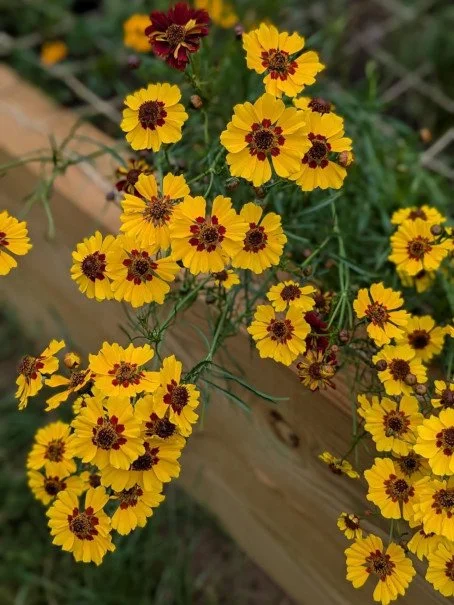
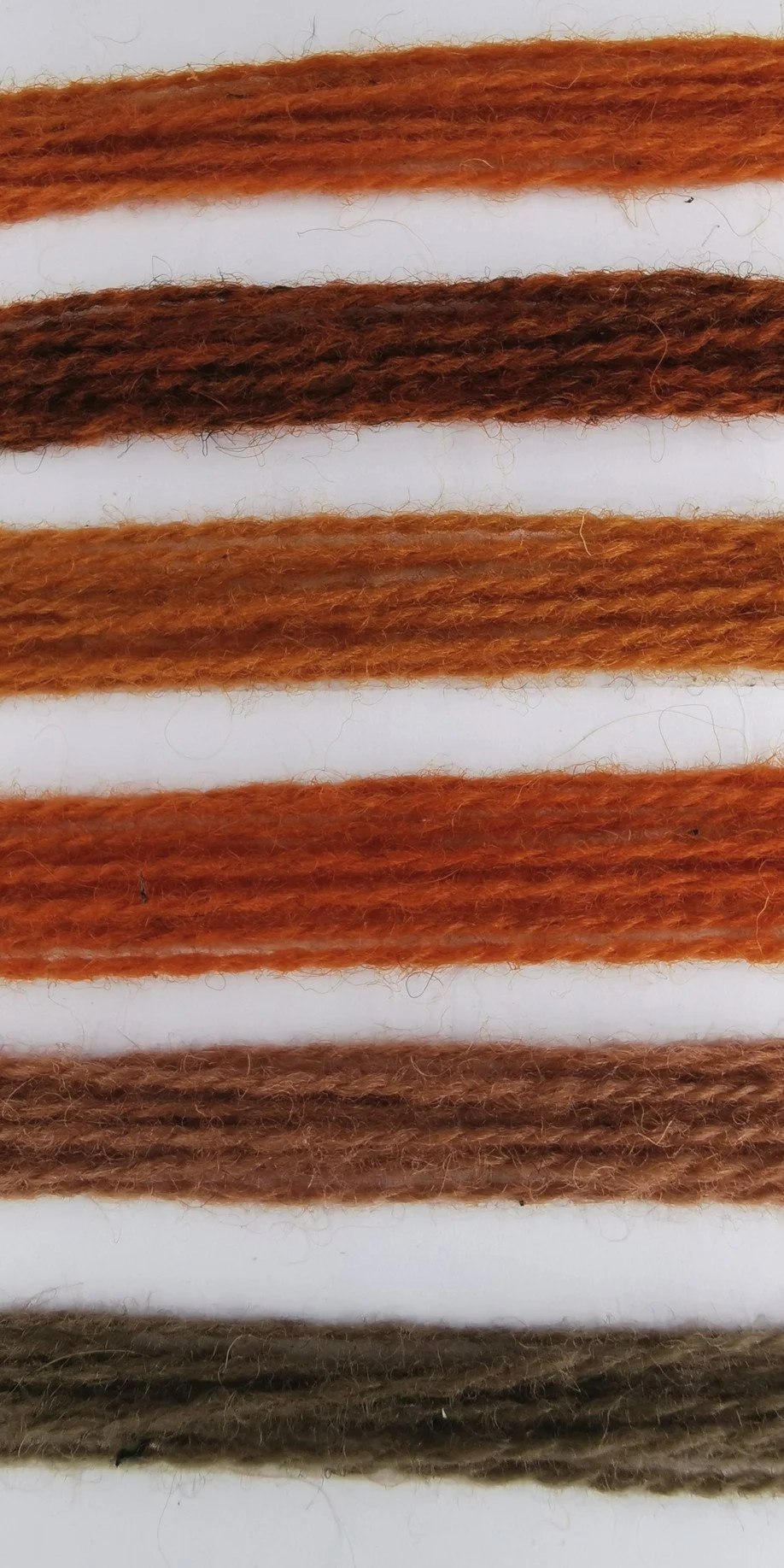
Coreopsis dye samples on wool


Dyer’s chamomile dye samples on wool
2. Dyer’s Chamomile (cota tinctoria)
Dyer’s chamomile is a variety of chamomile (the herb used in tea), often with bright yellow flowers. It’s a short lived perennial, meaning that once you’ve grown it from seed, it should last for 3-4 years.
In its first year the plant will produce lots of feathery foliage and flowers - both of which can be used for dyeing. The plant is generally low lying, and makes for a nice border plant for raised beds as it cascades over the edges.
In the dye pot the flowers of dyer’s chamomile produce a rich, buttery yellow, and can be modified with iron or copper to make strong greens. Dyeing with just the foliage will yield pale greens and yellows.
3. Japanese Indigo (persicaria tinctoria)
Japanese indigo, along with woad, is a plant that contains indigotin, the pigment that makes a blue natural dye. Both can be grown easily in the UK, but I now prefer to grow Japanese indigo as the colour it produces is more vibrant.
Sow the seeds from late February and keep the plants indoors until the overnight temperatures are at least 10 degrees. Once planted outside the plants should produce lots of leaves quickly. Harvest the leaves for dye, and they will grow back 3 or 4 times in a season for further dye vats.
Extracting the blue pigment from Japanese indigo is slightly different to creating most dye baths, but you can extract blues fairly easily using some quick methods. Read this blog to learn more…


Japanese indigo dye samples on wool

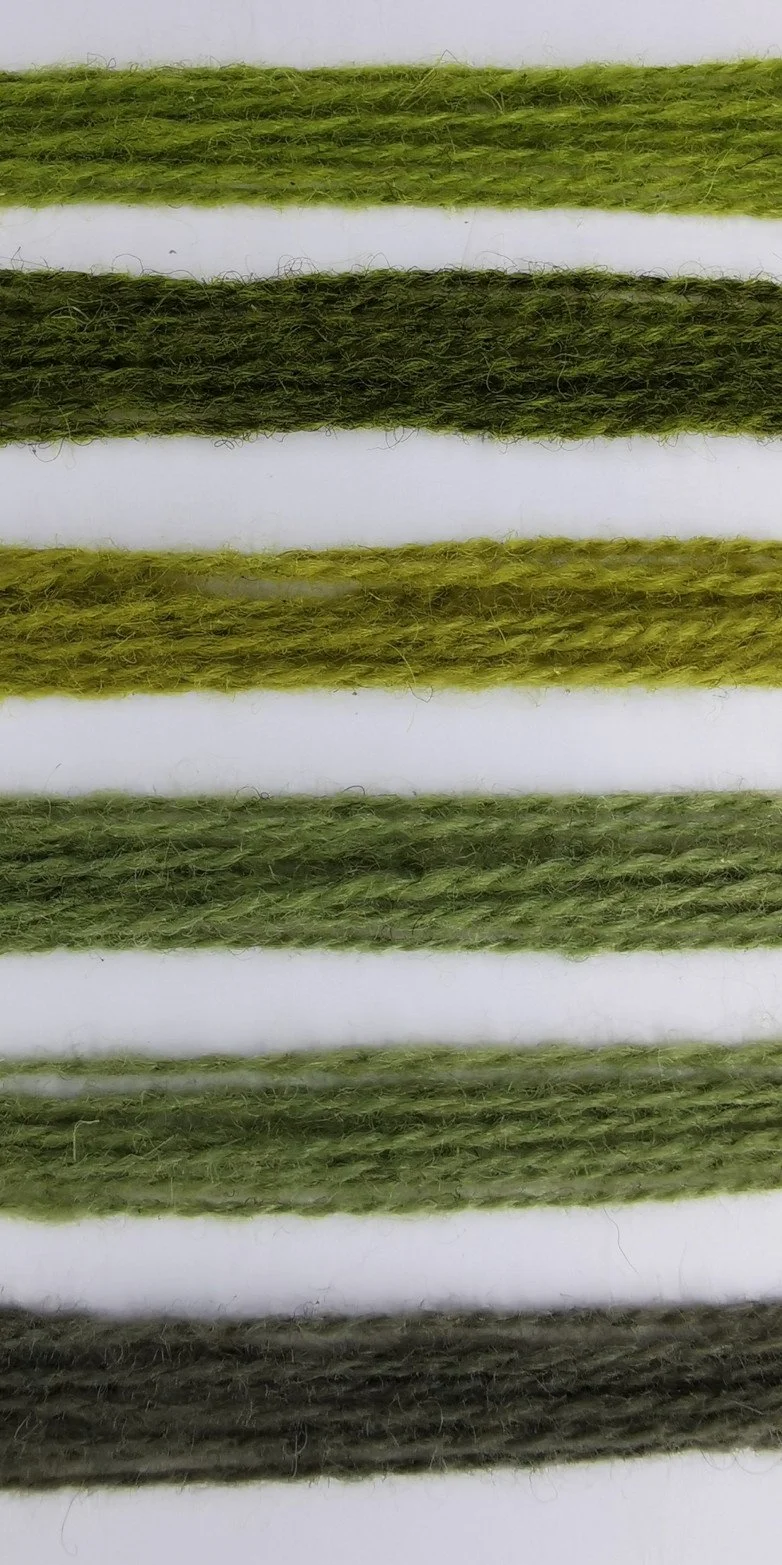
Scabious dye samples on wool yarn
4. Scabious ‘Black Knight’ (scabiosa atropurpurea)
The dark purple pincushion flowers of scabous ‘Black Knight’ are a real delight, providing a nice contrast from the yellow and orange flowers that dominate my dye garden. The long stems they produce mean they make for a great cut flower as well as a dye source!
Make sure you buy seeds of this particular ‘Black Knight’ variety, as the paler lilac ones aren’t useful as a dye plant. It’s technically an annual plant, but I have plants in my sheltered garden that have successfully overwintered and flowered the next year.
Surprisingly, the bright purple flowers product a stunning bright green in the dye pot! The petals also work really well in bundle dyeing, producing dark blue and green spots on the cloth.
5. African marigold (tagetes erecta)
Marigolds of all varieties can be used for natural dyes, but I find the African variety give you the most value for money. The flowers are much larger than their French counterparts, and it’s the blooms that you use for dye.
African marigolds are easily sown from seed and grow quickly, flowering from late Spring onwards. I grow the variety ‘Crackerjack’ for yellow and orange flowers, and I’m trying the ‘Kees Orange’ variety this year to see how they compare.
In the dye pot marigold blooms produce a deep, golden yellow that’s almost orange (if you use an alkali modifier). With an iron or copper modifier you can yield grassy greens.


Marigold dye samples on wool yarn
If you’re a novice dyer and grower, I hope you’ve found this blog post helpful, and it encourages you to give growing some dye plants a go. If you’re an experienced dye grower, I’d love to know your thoughts on my top 5, and also your personal favourite easy plants to grow!
If you’d like to learn more about how to grow your own natural dyes - you can buy the recording of my February 2026 workshop ‘Planning a Natural Dye Garden’. In the workshop I share my wealth of knowledge from seven years of growing in variety of spaces, and guide you through the best dye plants to grow for your own space. Whether you have a balcony or a large garden, there are dye plants suitable for you!
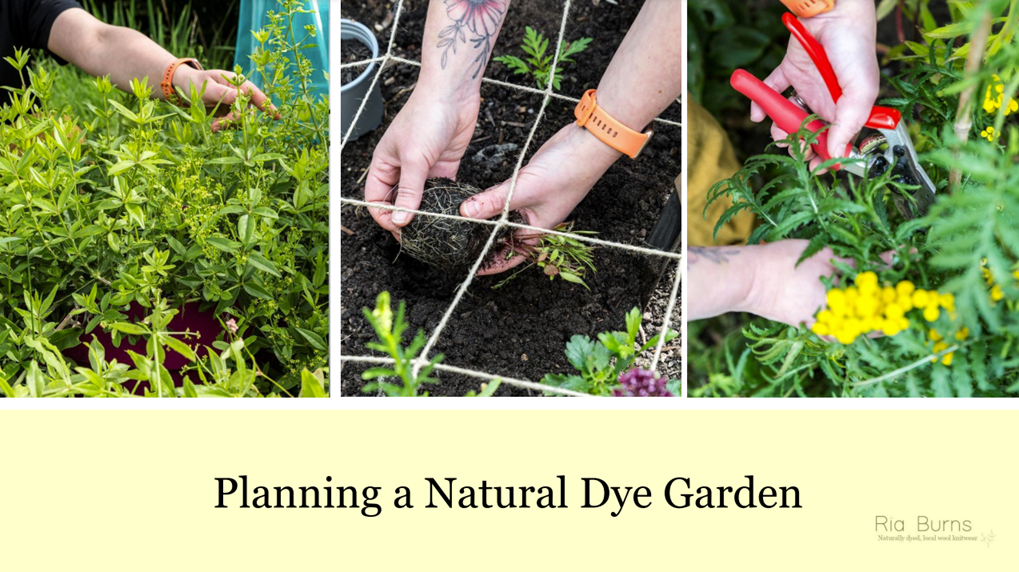
Learn to grow your own colour!
In this digital download of an online workshop recording from February 2026, Ria guides you through the range of plants that can be grown for plant powered colour, and suggests ways of growing your own dyes that work with the space you have.
Whether you have a windowsill, balcony, garden, allotment or farm, there are plants suitable for everyone to grow. Ria will discuss plant placement, soil and nutrients, as well as sharing dye samples for each plant to show the range of colours that can be achieved.
Ria will also share plans for the second year of growing natural dyes their North Somerset garden, and show how their previous growing spaces have influenced and informed the new space.
Ria has 8 years experience of growing natural dyes for their business and has a Level 2 qualification in Practical Horticulture from the RHS. They are the author of ‘Dyeing Yarn Naturally’, published by the Crowood Press in 2023.
Here’s what some of the attendees have had to say about this workshop:
5/5 - Ria is an inspirational teacher, her classes provide so much great information. I have bought and planted lots of seeds and will be joining Ria’s SeedtoSkein membership to continue learning.
5/5 - I really enjoyed this workshop, it was very informative without being overwhelming. I now have a better understanding of dye gardens and how to optimise success. I have also signed up for the monthly seed to skein online course. Looking forward learning more.
5/5 - Great presentation, easy ordering, professional support. Recommended!
5/5 - really enjoyed this class. Ria has a lovely delivery tone and is very knowledgeable.
After completing checkout you will be emailed a link to download a Zip file, which contains the video recording (MP4 format) and a PDF of the slides presented. The PDF includes detailed profiles of ten dye plants, plus a list of seed suppliers with clickable links to their websites.
Please do not share the recording or PDFs - these materials are provided exclusively for the use of those who have purchased it. Thank you!
Seed to Skein, which is launched in this workshop, is my new growing-led membership community for those that wish to grown their own dyes, and learn how to create beautifully dyed yarns with those plants! Learn more and join the community here…