
Natural Dyeing with Coreopsis Tinctoria Flowers - Fresh from the Dye Garden!
Would you like to learn how to grow and use your own natural dye plants? My new membership community, Seed to Skein, is now open for members! For £15 per month, you'll receive five pieces of unique content every month to help you grow natural dyes and create beautiful naturally dyed yarns. Alongside the content you'll have access to a private Discord community where you can share updates, ask questions, and learn from each other.

I’ve got 15 Coreopsis Tinctoria plants in the dye garden, and they just have started flowering rather prolifically! The variety is ‘Roulette’, which gives multiple shades of yellow and red blooms (seeds purchased from Chiltern Seeds).
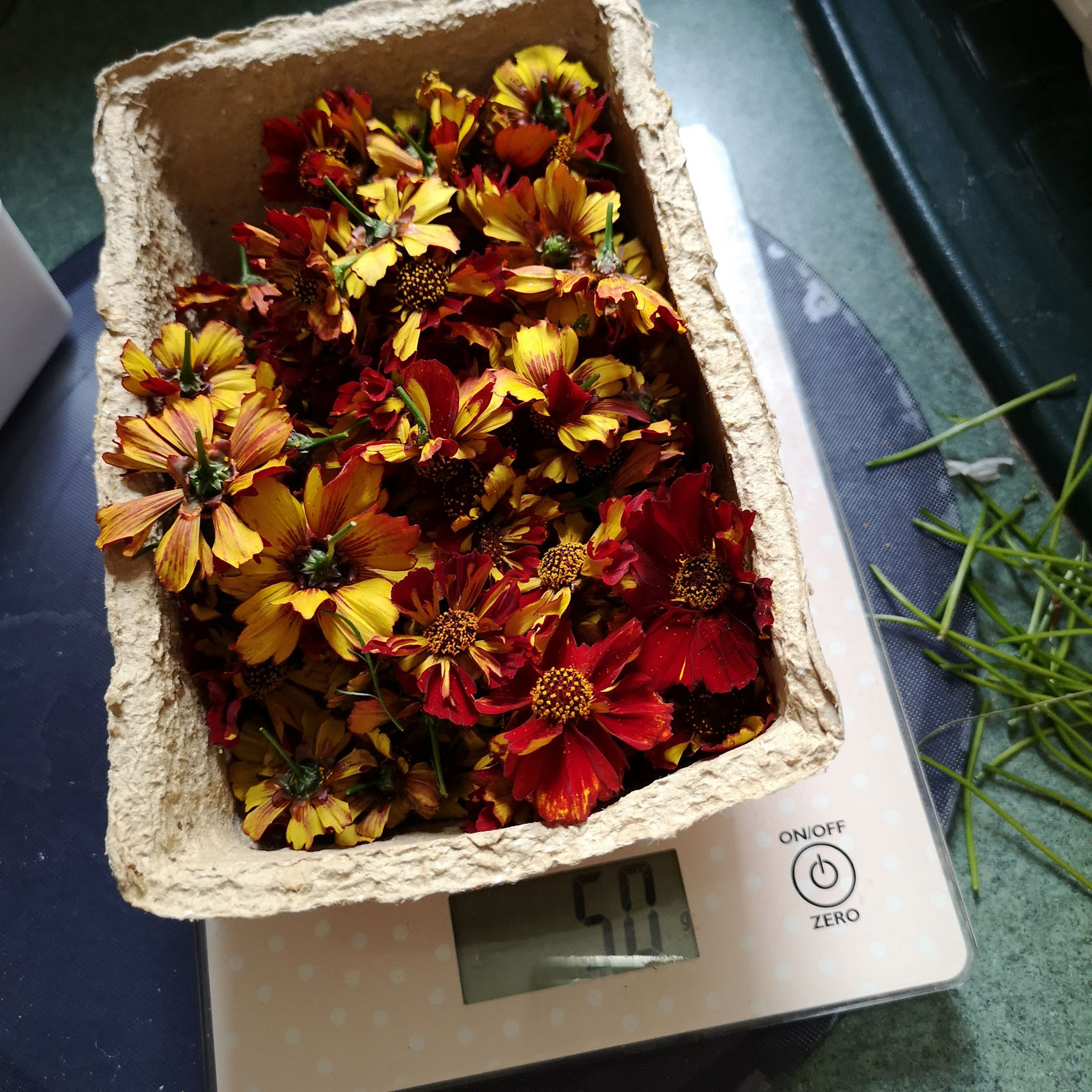
I’ve been picking blooms daily and drying them until I have enough for a dye bath. On a particularly sunny Saturday, I picked 50g of flowers, so decided to make a fresh dye bath to test the colour potential in these flowers. A 50g harvest sounds small - but these flowers are tiny!
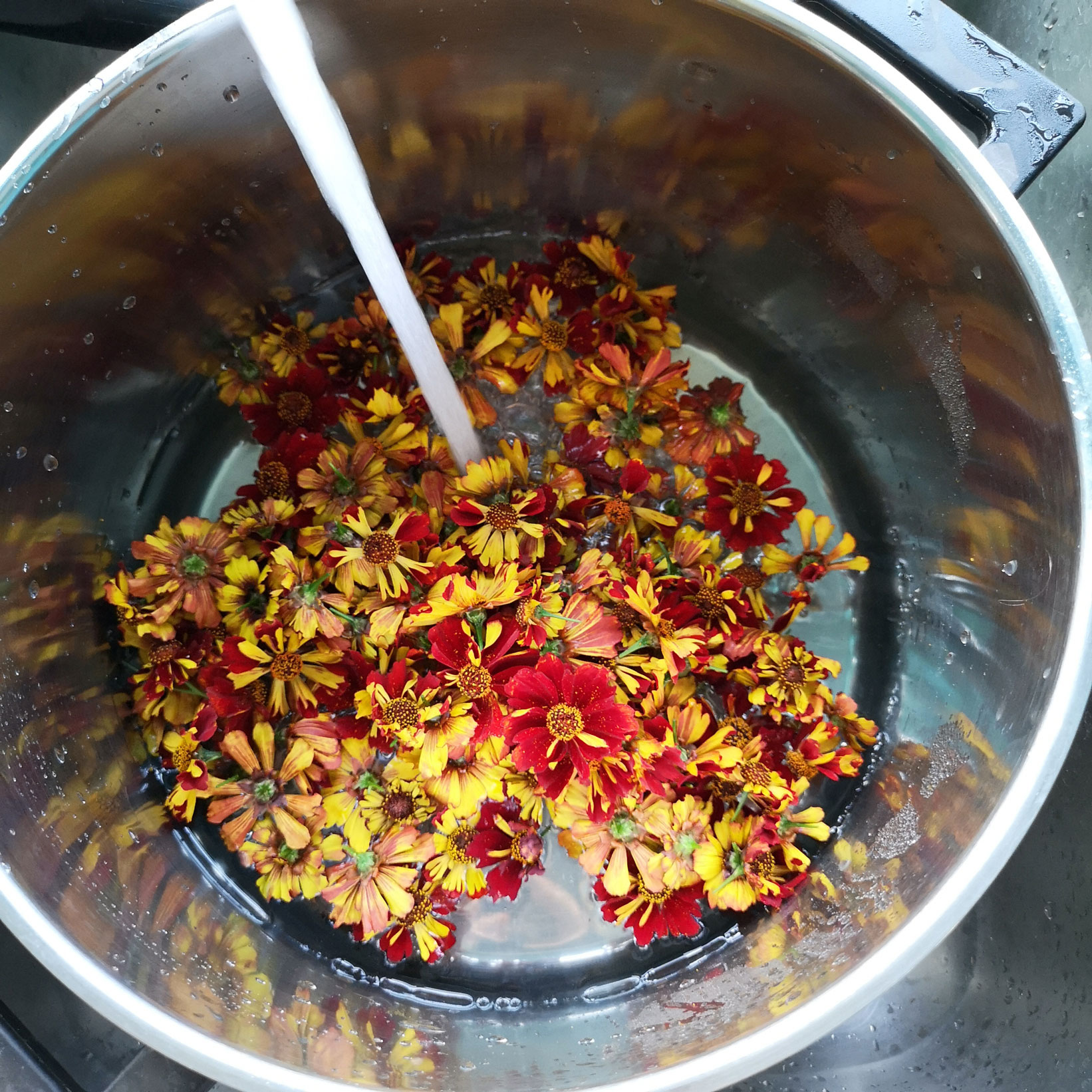
To prepare the flowers for the dye pot, I removed any long bits of stalk so as not to contaminate the colours, but kept the flowers whole. I added them to a pot of cold water, which I heated to a simmer for an hour, then left to cool overnight. The next day, I strained the liquid through a muslin to remove any bits of plant material - this is optional but it stops bits of plant getting stuck in the yarn!
100g of alum mordanted wool yarn was then added to the dyepot. I then reheated the pot to a simmer for an hour, and again left it to cool overnight.
I then let the skein of yarn dry on the washing line without having rinsed it first - I’ve found that this helps the yarn retain more of the colour. Once the yarn was dry I then rinsed and washed it in a pH neutral soap.
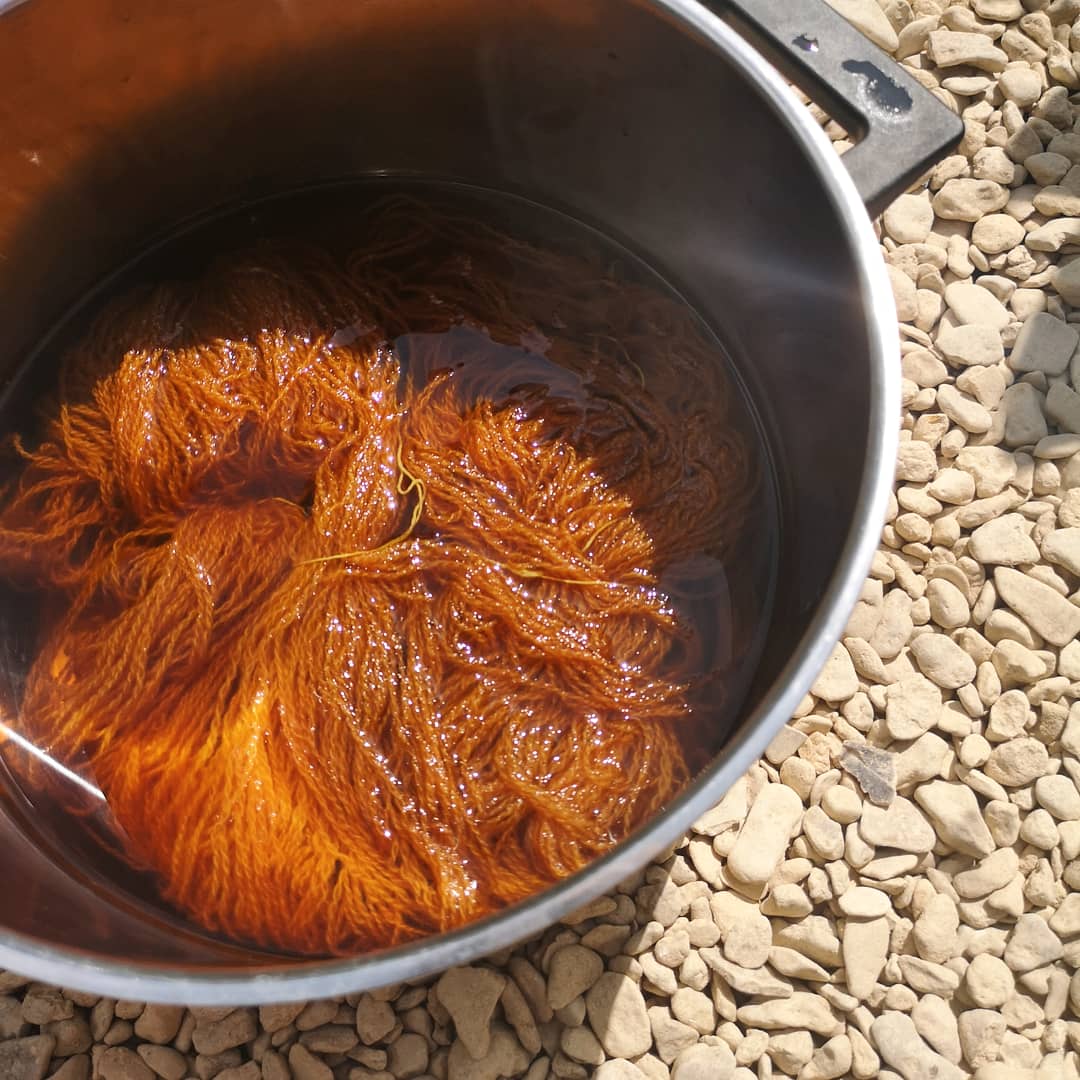
As you can see below the resulting colour is just stunning! I really didn’t expect to get this vibrant an orange from only half the weight of plant to fibre. It will be interesting to see how dyeing with dried flowers will compare…

As a member of Seed to Skein, you'll receive five pieces of unique content each month to help you grow natural dyes and create beautiful naturally dyed yarns. Alongside the content you'll have access to a private Discord community where you can share updates, ask questions, and learn from each other. New content is released on the second Monday of each month.