Ideas for A Dyer's Garden
Note before reading: This blog was written in 2017, when I was studying for my MA (hence the Harvard referencing!). Where needed, I have edited these posts to correct any factual inaccuracies. This post was last edited Jan 2025.
2025 update: I have been growing natural dyes for 6 years now! If you’d like to learn how to grow your own natural dyes in any space, I am running an Online Dye Garden Planning workshop on February 20th.

A recording of this workshop is available to buy and download from the shop now for £18. Click here to purchase.
Would you like to grow some natural dye plants this year? In this online workshop, Ria will guide you through the range of plants that can be grown for plant powered colour, and suggest ways of growing your own dyes that work with the space you have.
Whether you have a windowsill, balcony, garden, allotment or farm, there are plants suitable for everyone to grow. Ria will discuss plant placement, soil and nutrients, as well as sharing dye samples for each plant to show the range of colours that can be achieved.
Ria will also share plans for the second year of growing natural dyes their North Somerset garden, and show how their previous growing spaces have influenced and informed the new space.
There will be the opportunity to ask questions during and at the end of the session.
The workshop will be hosted on Zoom at 7pm GMT on Thursday 19th February, and you can register up to an hour before the event. Participants will be sent the meeting link a few days before the event. If you are unable to make the live session, you will be sent the recording and slides, and will be able to catch up for 30 days afterwards.
Ria Burns has 7 years experience of growing natural dyes for her business and has an RHS Level 2 qualification in Practical Horticulture. They are the author of ‘Dyeing Yarn Naturally’, published by The Crowood Press in 2023.
CONCESSIONARY DISCOUNT: Students and those on a low wage can save 15% off the ticket price of this or any other workshop using the code CONC15
Starting next year (2018), I would like to start growing my own dye plants. Jenny Dean's blog is an excellent resource for help with this, and I have the bonus of my mum being a horticulturalist how promises to help! It would require quite a lot of work, but it would mean I would know exactly where the plants had come from, proving its provenance and drastically reducing the carbon footprint of my practice.
I am wondering whether I could make the growing and harvesting process part of my creative work. Carissa Carman has done this, forming the Color Collective with two other artists:
The Color Collective, my collaboration with Sarah Gotowka and Johanna Autin, not only grew plants for natural dyeing but also took on investigations of color through performed actions, temporary architecture, and customized tools. (2015, online)
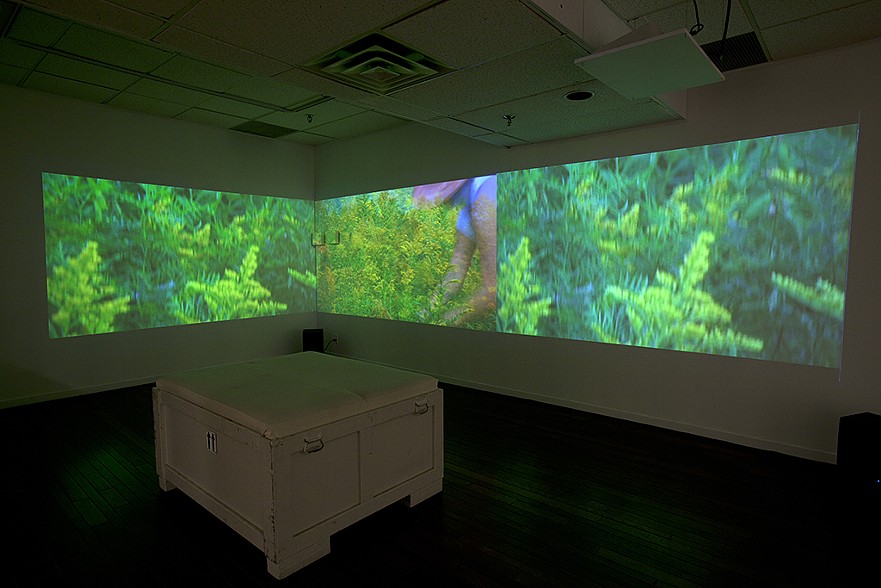
There was no dyed cloth in the exhibition as the plants were not yet ready - the project is ongoing. Discussing this with fellow artist Rowland Ricketts, he poses the question: "What happens when the process is the motivator instead of the product?" This is a really interesting idea, and is demonstrated in Ricketts work, where he displays indigo plants next to indigo dyed cloth.
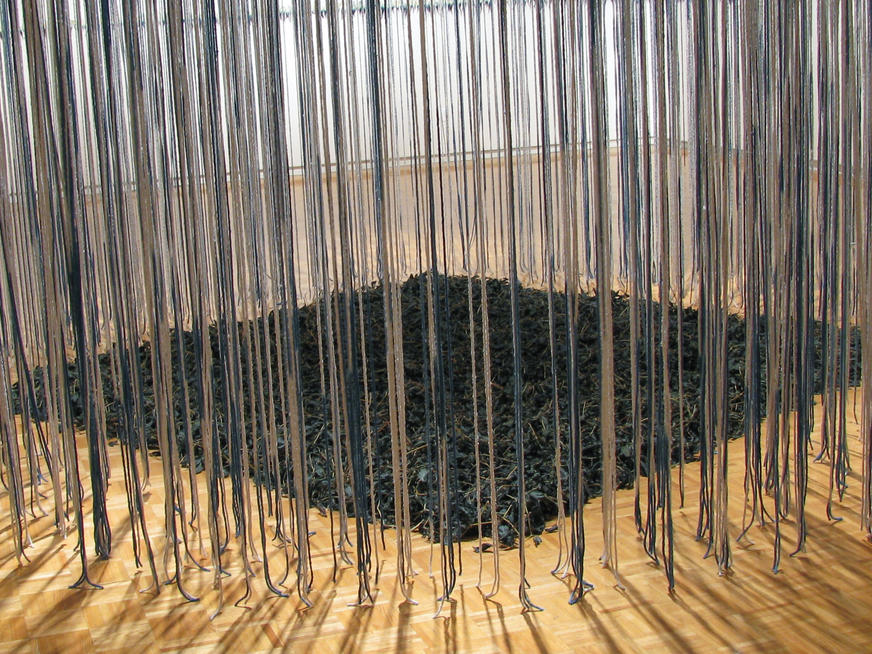
Both artists work is very exciting and I am keen to do further research. I also can't wait for winter to be over, so I that I can start working on my own dye garden!
References:
Carman, C and Ricketts, R. (2015) Does it Matter? Process and Product in Contemporary Natural Dye Practices [Online] Available from: http://www.artpractical.com/feature/does-it-matter-process-and-product-in-contemporary-natural-dye-practices/ [Accessed 10 December 2017].
Dean, J. (2017) The Dyer's Garden. [Online] http://www.jennydean.co.uk/category/the-dyers-garden/ [Accessed 10 December 2017].